


[Science News] – Canephorum V4: Coffea canephora, from Genetics to the Cup
On 22 and 23 June, Meise Botanic Garden hosted Canephorum V4, an international event entirely dedicated to Coffea canephora, better known as robusta coffee. This fourth edition, organised by Cumpa and the Botanic Garden, brought together a specialised audience of researchers, producers, roasters, sensory experts and other actors from the coffee value chain. Together, they explored genetic diversity, processing practices, conservation challenges and quality perspectives that are shaping the future of Canephora today.
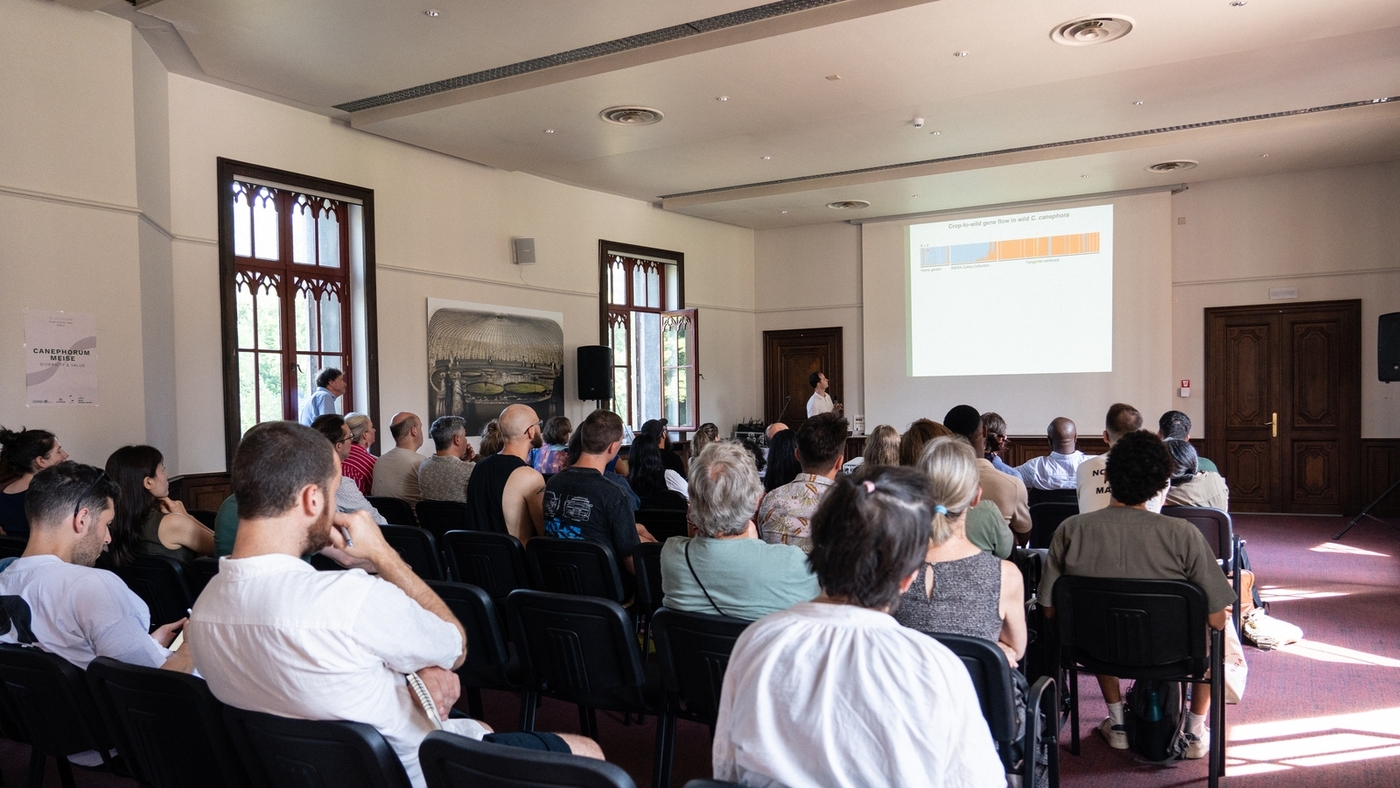 The programme alternated scientific lectures, practical workshops and moments of exchange. From the opening session, participants were immersed in the evolutionary history of Coffea canephora thanks to contributions from Dr Piet Stoffelen and Dr Robrecht Bollen – researchers at Meise Botanic Garden – who presented the origins and significance of the species’ contemporary wild diversity. Researcher Dr Catherine Kiwuka from Uganda then highlighted the importance of studying climate adaptation within the diversity of African C. canephora plants.
.jpg) The afternoon of the first day built a bridge between theory and practice. Visitors were able to explore the Green Ark greenhouses and the Garden’s herbarium, essential places for taxonomic research and the conservation of living collections, particularly the coffee plant collection, which includes around thirty wild species out of the more than 110 known worldwide. In parallel, several cupping sessions – a professional and standardised method for tasting and evaluating coffee – offered the opportunity to discover robusta coffees from Africa (DRC, Togo, Uganda), Asia (Vietnam, Indonesia) and South America (Brazil, Guatemala, Mexico, Peru). These coffees are characterised by a unique aromatic palette that remains little known to the general public. The Congolese coffee from the Botanic Garden’s research project received particularly positive feedback. Dr Michel Baqueta from Brazil concluded the day with a presentation on various analytical techniques used to trace and understand Canephora diversity.
The afternoon of the first day built a bridge between theory and practice. Visitors were able to explore the Green Ark greenhouses and the Garden’s herbarium, essential places for taxonomic research and the conservation of living collections, particularly the coffee plant collection, which includes around thirty wild species out of the more than 110 known worldwide. In parallel, several cupping sessions – a professional and standardised method for tasting and evaluating coffee – offered the opportunity to discover robusta coffees from Africa (DRC, Togo, Uganda), Asia (Vietnam, Indonesia) and South America (Brazil, Guatemala, Mexico, Peru). These coffees are characterised by a unique aromatic palette that remains little known to the general public. The Congolese coffee from the Botanic Garden’s research project received particularly positive feedback. Dr Michel Baqueta from Brazil concluded the day with a presentation on various analytical techniques used to trace and understand Canephora diversity.
The second day began with an in‑depth look at the chemistry of coffee roasting. Under the guidance of Dr Lukas Macheiner, participants were introduced to the chemical processes and parameters essential for optimal roasting of Canephora coffee, which differs significantly from that of Arabica. Dr Christophe Van Neste and engineer Augustin Peeters from the Botanic Garden concluded the morning with a presentation showing how elemental analysis of coffee can be used to strengthen traceability and support the implementation of the new European deforestation regulations within the coffee sector.
In the afternoon, experts held panel discussions with the audience on four themes: breakthroughs in genetics, training, market value and the quality image of the species.
These discussions were presented as future perspectives for Coffea canephora, a species long underestimated compared to Arabica coffee (Coffea arabica). The presence of international participants from more than 20 countries – including India, Indonesia, Brazil, Guatemala, the DRC, Uganda and Togo – enriched the exchanges and underscored the global importance of this crop.
During Canephorum V4, Meise Botanic Garden reaffirmed its role as a central meeting place where all actors in the sector can engage in dialogue. In doing so, the Garden contributes to a deeper understanding and greater appreciation of robusta – or rather Canephora – coffee in all its diversity.
.jpg)