




[Science News] – Fractions, labels and investigative work: Giorgio Jan's hidden hand in the herbarium
The Van Heurck Herbarium (AWH), preserved at Meise Botanic Garden, contains thousands of specimens with labels bearing very little information: no collector’s name, no date, and no locality. This is not unusual for herbaria dating from the 18th and early 19th centuries.
However, careful detective work can sometimes reveal who the collector was and/or where and when the plants were collected.
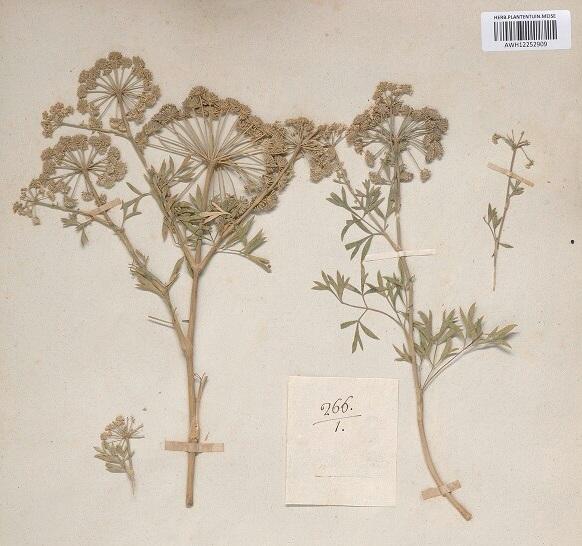
A collection of several hundred plants from the sub-herbarium of Franz Wilhelm Sieber consists of specimens with labels displaying a number written as a fraction. Some labels in this series were later provided with a plant name in a different handwriting and ink. By comparing the various specimens, the meaning of the numbers can easily be determined. The number in the numerator refers to a genus name, while the number in the denominator refers to a species name. But who was the collector? One plant bearing two labels provides the answer: Giorgio Jan.
Giorgio (also Georg or Georges) Jan was born in Vienna and had wide-ranging interests in plants, reptiles and paleontology. He taught botany at the University of Parma, where he also became director of the botanical garden. Later he worked at the Museo Civico di Storia Naturale di Milano.
In 1820 Jan published four herbaria: Flora Italiae superioris, Herbarium technico-georgicum, Herbarium toxico-medicum and Herbarium portatile.
Part of the Jan herbarium still bears the original printed labels. On other specimens, the text of the printed label was copied by hand. The majority of the plants, however, contain only the information written in fractional form.
Where do these fractions come from? The answer can be found in a catalogue listing all the fractional numbers and their corresponding plant names, published in 1831 under the title Elenchus plantarum quae in Horto Ducali Botanico Parmensi anno MDCCCXXVI coluntur: et quae exsiccatae pro mutua offeruntur commutation (“List of the plants cultivated in 1826 in the ducal botanical garden of Parma, and which, when dried, are offered for mutual exchange”).
Outside Italy, only a few herbaria hold material collected by Jan. The Jan collection in Meise contains around 600 specimens, representing an exceptional scientific and historical resource of which the Meise Botanic Garden can be proud.
.
 |
.jpg) |
|
Herbarium specimen containing only fractional data 266/1: Cumin (Cuminum cyminum) |
Erica arborea (364/7) in the ‘Elenchus plantarum…’ |
.jpg) |
.jpg) |
|
Specimen that enabled the collector to be found. The name of the plant was added later to the handwritten label. (The break is in Jan's handwriting, the name is not.) |
Original format of the Herbarium portatile from 1820 (© Musei dell'Ateneo di Parma) |
 |
.jpg) |
|
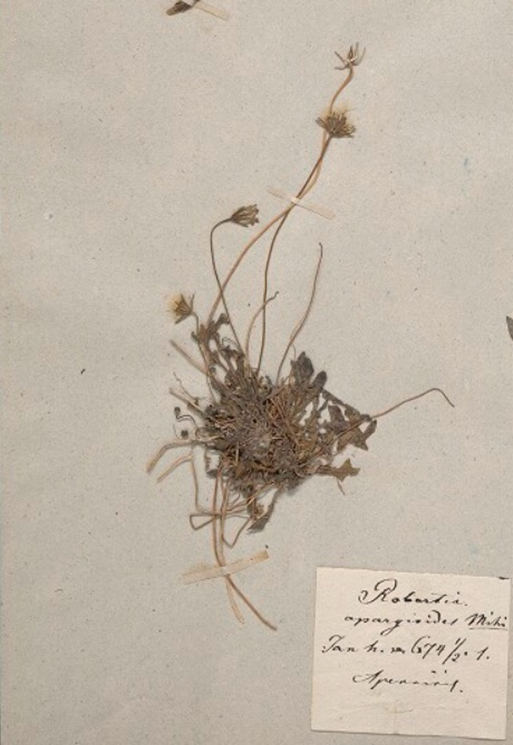
Robertia apargioides Jan (mihi = mine): A name that was never validly published for a composite flower from the Apennines. (Manuscript Jan) |
Bust by Giorgio Jan in the Museo civico di storia naturale di Milano by Filippo Biganzoli (1823–1894) © Giovanni Dall'Orto. |