


[Science News] – Publication of the latest classification of flowering plants
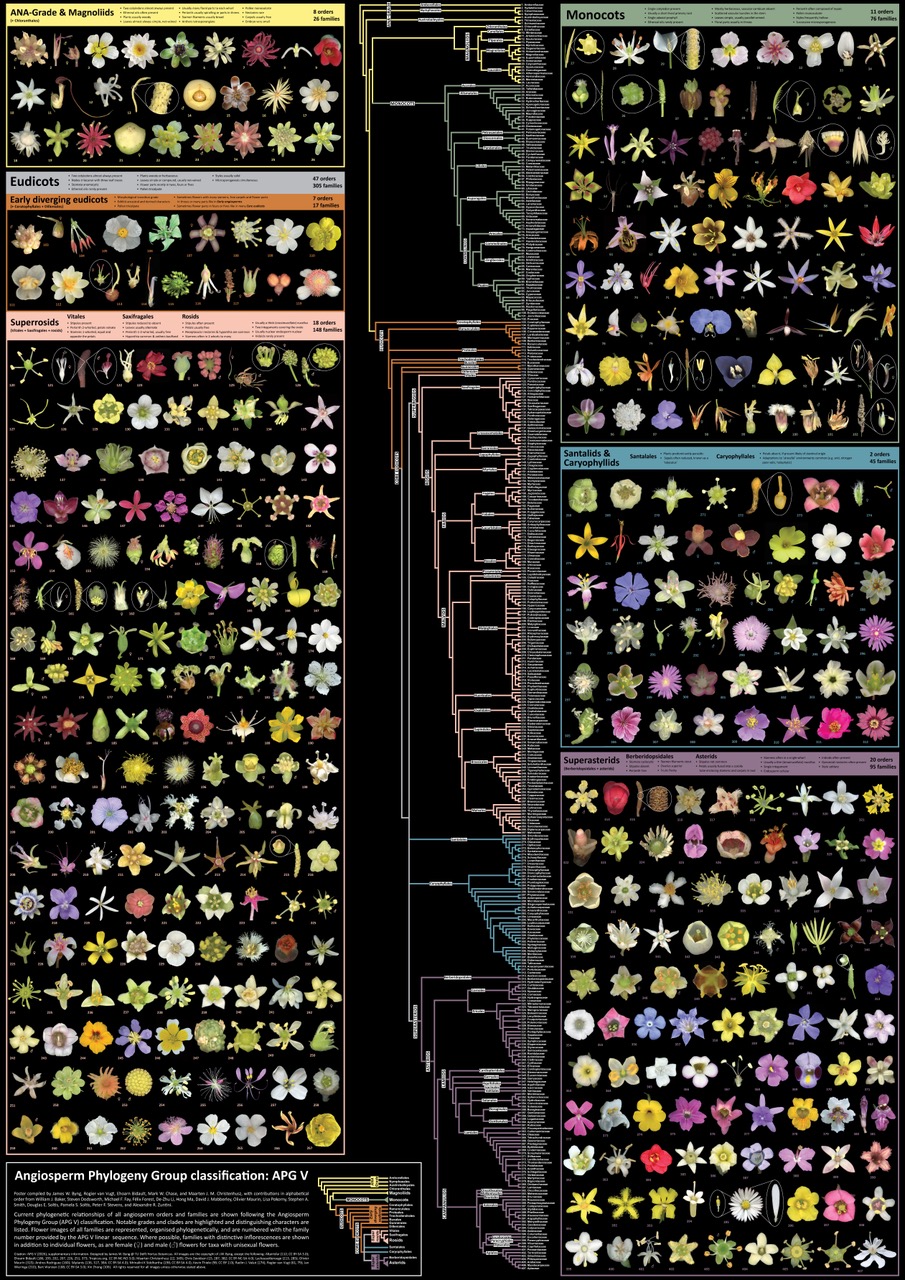 The identification and classification of plants are at the core of our botanical garden's mission and other botanical gardens around the world. Grouping plants based on shared characteristics allows botanists to structure plant diversity and gain a better understanding of the living world.
Historically, classification relied primarily on the most obvious morphological resemblances: the structure of the flower, its morphology… However, the so-called "phylogenetic" classification, which is based on genetic similarities, has become increasingly important, notably thanks to revolutionary advances in genetic (DNA) techniques over the past few decades. This classification reflects true evolutionary relationships (common ancestry) much better than simple physical similarities.
Angiosperms, commonly known as flowering plants, have undergone this transition thanks to the work of the Angiosperm Phylogeny Group (APG), which has updated its reference system through several iterations, starting with APG I in 1998. A decade after the previous version (APG IV), APG V was released in September 2026.
This new version builds on major advances in phylogenomics, in particular data from the Plant and Fungal Trees of Life (PAFTOL) project. The work of PAFTOL was led by the Royal Botanic Gardens, Kew, in close collaboration with numerous scientists worldwide, including those from the Meise Botanic Garden. It covers more than 85% of the approximately 14,000 known angiosperm genera. APG V introduces several taxonomic adjustments, most notably a reduction in the number of recognized angiosperm families, from 416 to 407.
The article is accompanied by an educational poster, available for free download, that presents the updated phylogenetic tree along with a photograph of a representative flower or inflorescence for each family.