


[Science News] – Citizens help scientists search for non-native land flatworms at Meise Botanic Garden
On June 27th, Meise Botanic Garden, together with the Research Institute for Nature and Forest (INBO), organised a BioBlitz focused on land flatworms as part of the European OneSTOP project. This is a short, intensive survey in which researchers and volunteers work together to map the presence of these non-native land flatworms. The activity was based on the FlatwormWatch concept, a citizen science initiative developed by the National Scientific Secretariat on Invasive Alien Species (NSSIAS), which engages the public in monitoring invasive land flatworms in Belgium.
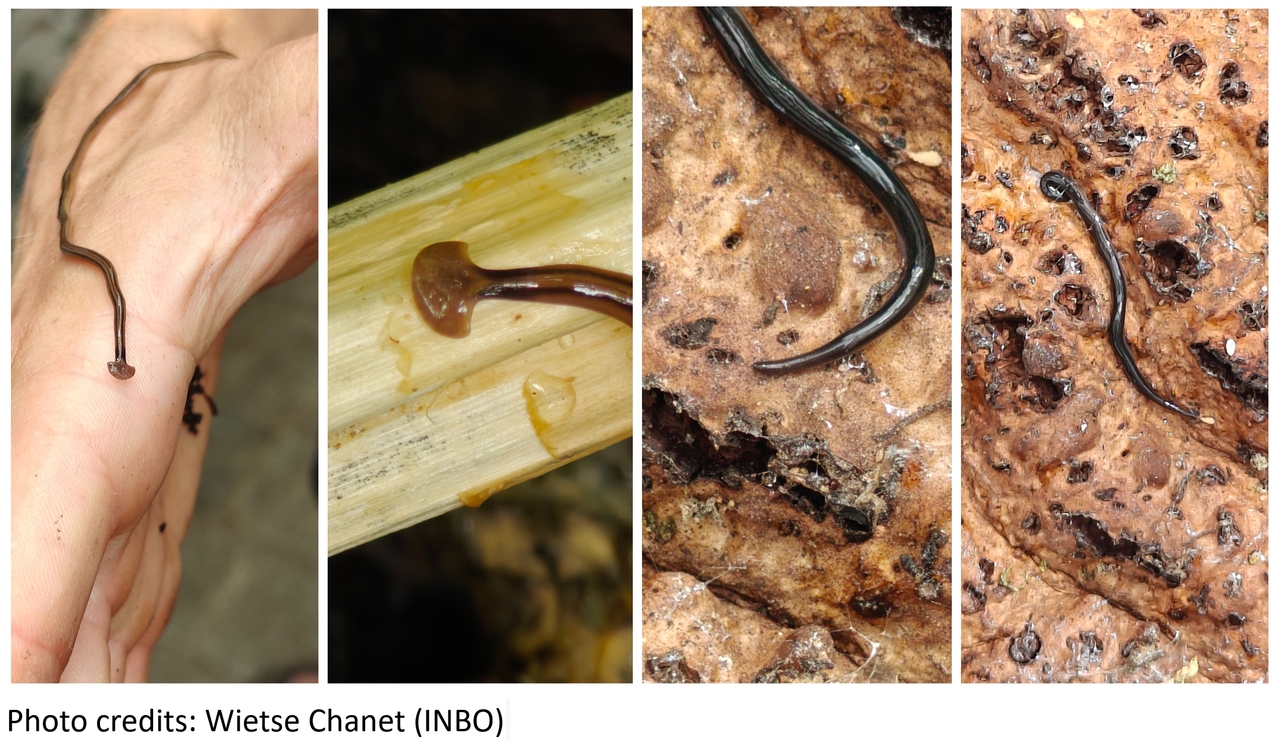
Land flatworms are predators that feed on earthworms and other soil invertebrates. Several non-native species have been introduced to Europe through the international plant trade and are gradually spreading. Because they can affect soil ecosystems and biodiversity, scientists closely monitor their distribution. They often travel unnoticed in the moist potting soil of ornamental plants, meaning that private gardeners can also unintentionally contribute to their spread.
The morning started with a short introduction on the biology of land flatworms and the objectives of the OneSTOP project. Participants learned how to recognise different species, why monitoring them is important, and how citizen science can contribute to scientific research.
The group then explored the Plant Palace. Greenhouses are an important study site, as their warm and humid conditions allow tropical species to establish. Under plant pots, stones and other moist substrates, they searched for land flatworms that remain well hidden during the day. Each observation – whether a flatworm was found or not – provides valuable information on the distribution of these species. Several flatworm species were recorded during the BioBlitz. Although expert confirmation is still pending for the full species list, the hammerhead land flatworm (Bipalium kewense) was confidently observed.
FlatwormWatch demonstrates just how valuable citizen scientists are. Thanks to the efforts of volunteers, researchers can collect data from many more locations than they could on their own. Together, they are making a real difference for biodiversity research.
The collected observations contribute to the European Horizon Europe project OneSTOP, which focuses on the prevention, early detection and management of invasive alien species. Each record helps researchers better understand the distribution of non-native land flatworms and assess and limit their impact on biodiversity.
Members of the public can also help. By checking the underside of newly purchased plant pots or the potting soil of ornamental plants, new introductions can be detected more quickly. Reporting findings via FlatwormWatch provides researchers with valuable data and helps limit the spread of these invasive species.
A big thank you to everyone who participated and helped uncover the hidden biodiversity beneath our feet!