




[Science News] – From the Middle East to Belgium: the discovery of Medicago peregrina, a plant of unknown origin
Researchers from Meise Botanic Garden have made a remarkable botanical discovery — a story with unexpected twists, recently published in the international scientific journal Plant Ecology and Evolution.
A disaster with unexpected consequences
In July 2021, the Vesdre Valley was severely affected by devastating floods. The turbulent waters carried away enormous quantities of mud and sediment, depositing them elsewhere along the riverbanks. This process also brought so-called “hard” seeds to the surface: seeds capable of surviving in the soil for decades, sometimes even more than a century, without losing their ability to germinate.
One year later, in 2022, a remarkable plant from the genus Medicago emerged on these freshly deposited soils in Goffontaine. It soon became clear that this species does not belong to our native flora. It was not alone: nearly 180 other non-native plant species were recorded at the site, mainly originating from the Southern Hemisphere, particularly Australia and South Africa.
Following the wool trail
How did these plants end up here? The answer lies in the region’s industrial past. The Vesdre Valley was once a global centre for wool processing. For more than a century, raw sheep fleeces were imported from distant countries. Seeds were often entangled in the wool and thus travelled unnoticed.
During the washing process, these seeds entered the river together with wastewater. There, they settled in the soil, where some remained hidden for decades — until the 2021 floods brought them back to the surface.
Identity revealed through modern techniques
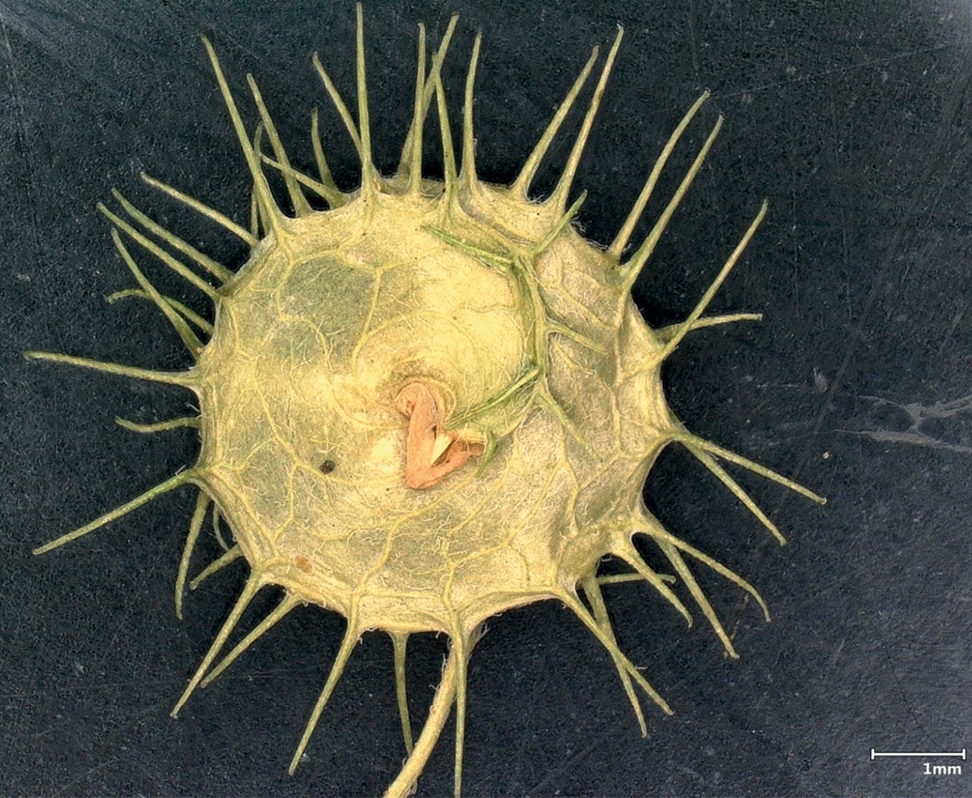 The researchers compared the specimen with Medicago species preserved in herbarium collections and described in floras from around the world. To their surprise, it did not match any known species.
To confirm their findings, they combined several research techniques. They analysed the plant’s DNA using multiple genetic markers and examined its morphological characteristics through scanning electron microscopy. The conclusion was clear: this is a new species.
The plant is closely related to Medicago heyniana, but differs in its smooth seeds, smaller fruits that turn black at maturity, and especially in the presence of papillose hairs — tiny hairs with small protrusions — a feature rarely found within this genus.
An unknown homeland
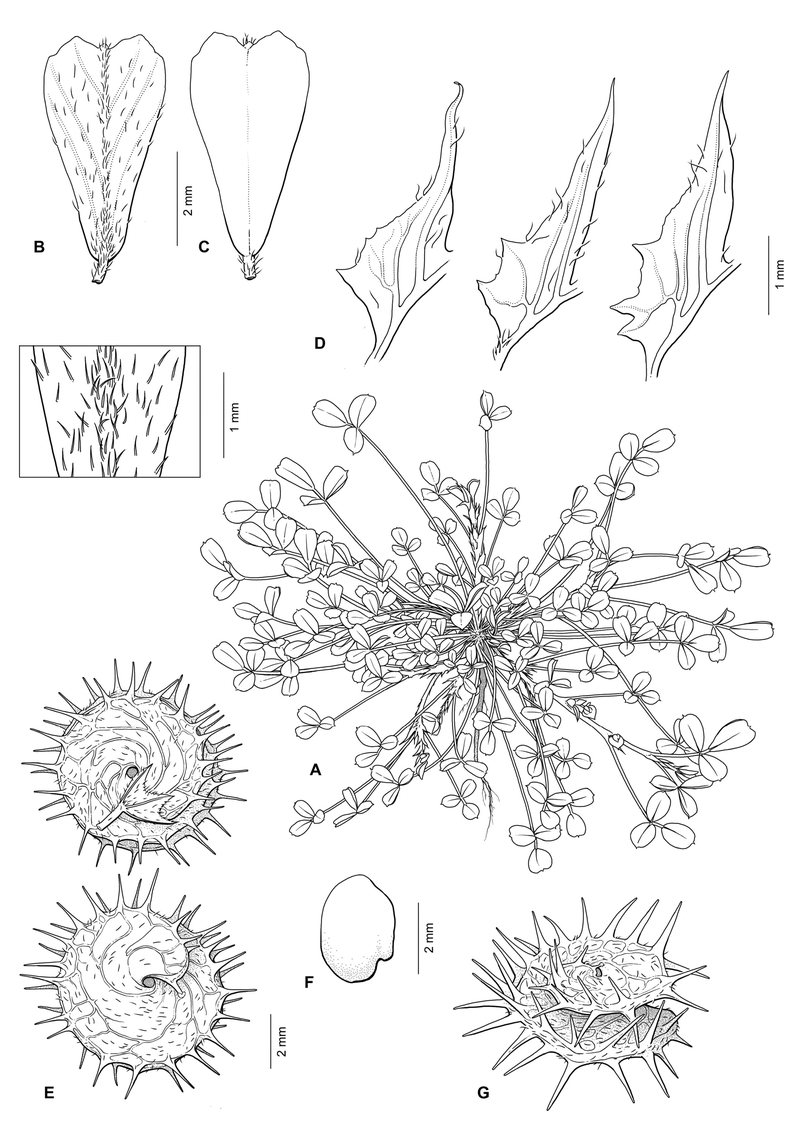 The original homeland of this species remains a mystery. It has never been observed in the wild. By linking genetic relationships with historical wool trade routes, however, the researchers were able to narrow down the likely region of origin.
All evidence points towards the Middle East, most likely the steppes of Iran or neighbouring regions. This area is known as an important centre of diversity for annual Medicago species. The new species was named Medicago peregrina — “peregrina” meaning wandering or foreign — a nod to its uncertain origin and long journey.
Possibly lost in its homeland
It is possible that Medicago peregrina is now rare or even extinct in its original range. Intensive overgrazing poses a serious threat to natural steppe vegetation in several parts of the Middle East.
The discovery of Medicago peregrina shows how historical trade flows can leave unexpected botanical traces, sometimes only revealed decades later. It also highlights the importance of botanical research in disturbed environments — and reminds us that plants sometimes tell stories that span continents and centuries.