




‘Les Arbres d’Afrique centrale’: an essential field guide
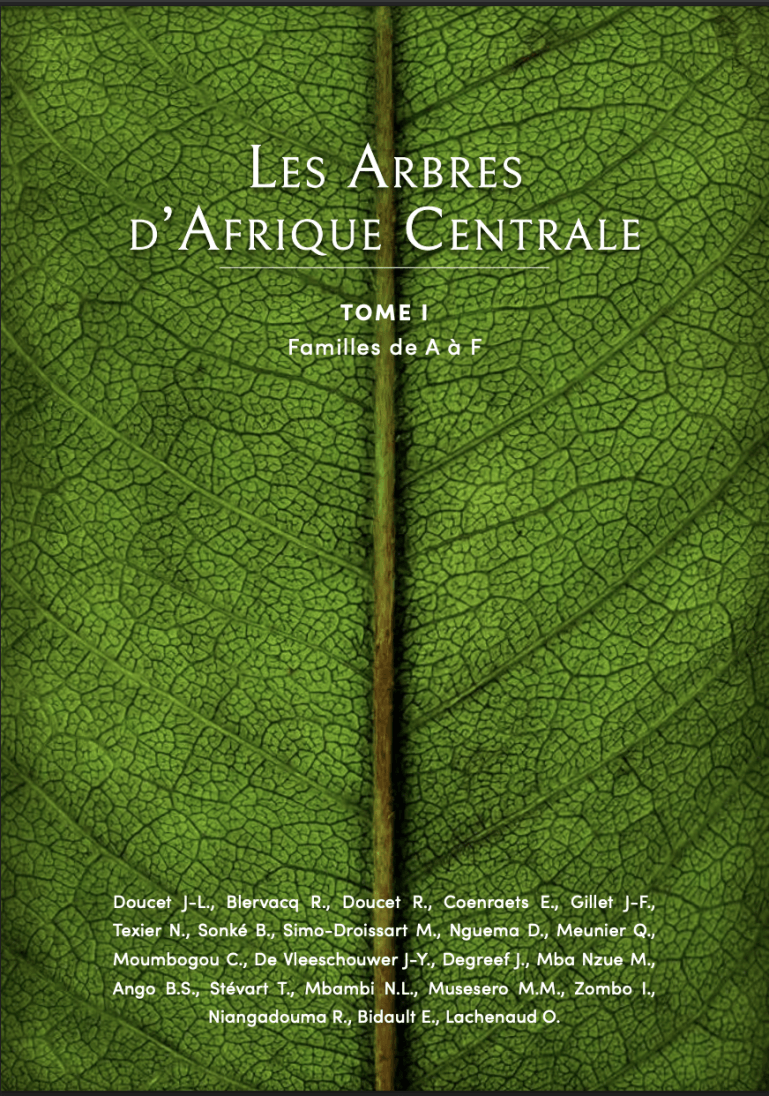 The first volume of this essential field guide, Les Arbres d’Afrique centrale, has just been published. It offers an accessible, comprehensive and richly illustrated reference work on the trees of this region of Africa for the first time. Co-published by Meise Botanic Garden, the non-profit organisation Nature+, and Gembloux Agro-Bio Tech at the University of Liège, this publication fills a significant gap in the existing literature.
The result of close collaboration between specialists from the Global South and North, the book is aimed particularly at field practitioners, forestry company staff, and training and research centre staff, as well as local communities. Incorporating the latest taxonomic updates, the guide meets their needs by describing and illustrating the trees of lowland and submontane forests in Central Africa.
This work is of unprecedented scope
This first volume covers plant families from A to F. It enables the identification of 863 tree species belonging to 39 botanical families using simple morphological criteria directly observable in the field. Each species is presented in a clear, richly illustrated factsheet that includes information on the tree's and seedling's appearance, its habitat, its relationships with fauna, its flowering and fruiting periods, and its traditional and industrial uses. Accompanying the texts are more than 4,000 colour photographs, making this book a true field companion and a valuable tool for gaining a better understanding of Central African forests. In parallel, 100,000 photographs have been integrated into the Pl@ntNet application to facilitate identification and link to the digitised factsheet of the relevant species.
Recognising trees is crucial for sustainable forest management
The forests of Central Africa are crucial for climate regulation, biodiversity conservation and local livelihoods. Yet, they are under significant pressure from the overexploitation of timber, the illegal trade in species and the expansion of industrial agriculture. Against this backdrop, the rules governing sustainable forest management and forest certification schemes are becoming increasingly stringent, as are the international requirements for traceability and species protection. Meeting these challenges requires in-depth knowledge of trees, including the ability to identify them, understand their ecology, and assess their vulnerability.
International collaboration
Les Arbres d’Afrique centrale is the result of an extensive international collaboration and is supported by the Central African Forests Commission (COMIFAC) and German development cooperation. It is designed as a practical, educational and scientific tool. There is no doubt that it will become an essential reference for better understanding, managing, and sustainably conserving the forests of the Congo Basin.
The guide is available free of charge in PDF format.