




[Science News] - Hunting invasive plants with help from AI
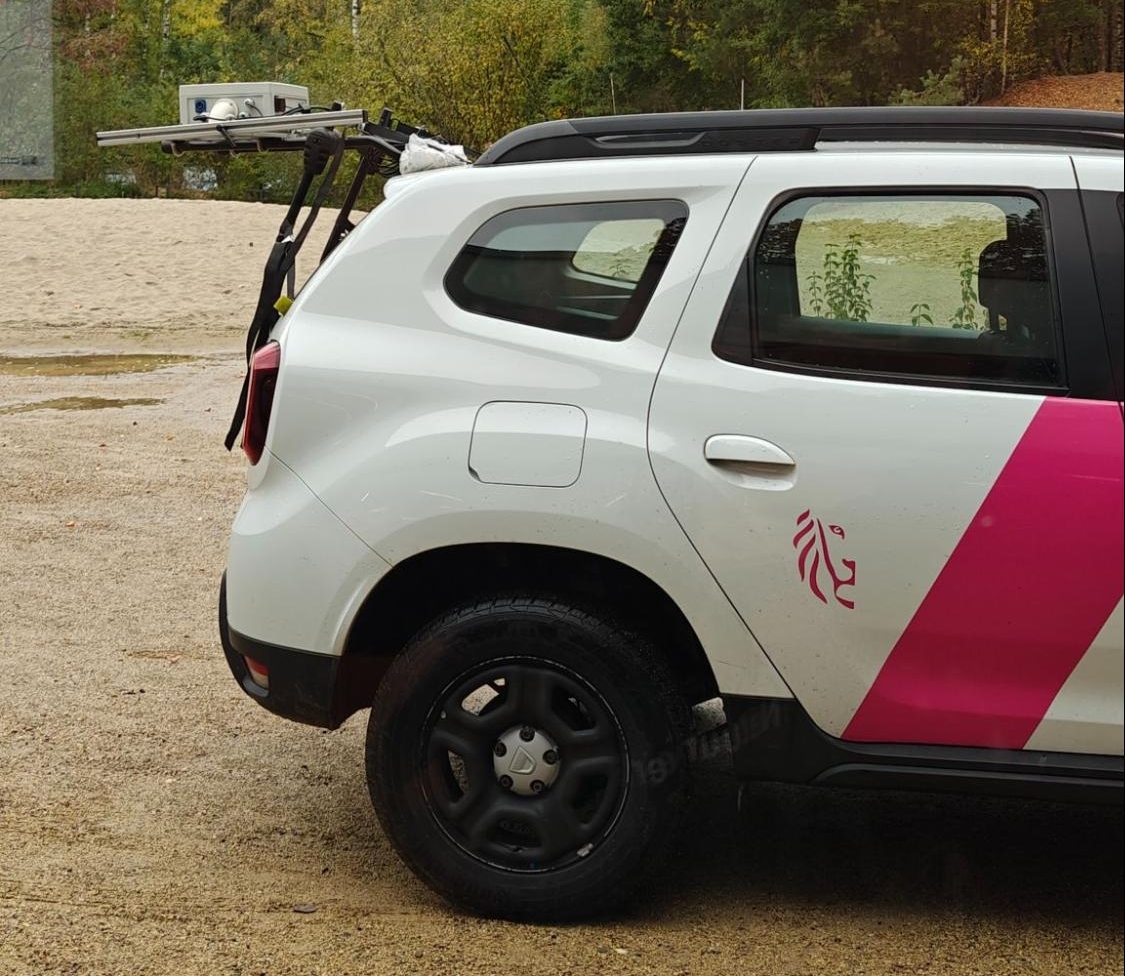 A living lab was recently held in Zutendaal as part of the European OneSTOP project, which explores how artificial intelligence can help detect invasive plant species. The smart camera CamAlien, mounted on a vehicle, takes thousands of photos during drives and automatically links them to GPS coordinates. Using AI, the system recognises plant species that pose a threat to local biodiversity, such as black cherry (Prunus serotina) or Japanese knotweed (Fallopia japonica). This makes it easier for forest managers to pinpoint where action is needed and to align their management plans more closely with what is happening in the field.
The technology was developed within OneSTOP, a collaboration of 20 partners across Europe working together to create innovative solutions for detecting and managing invasive species. Aarhus University designed the system, while Meise Botanic Garden and the Research Institute for Nature and Forest (INBO) are putting it into practice through living labs in Belgium. Funded under the Horizon Europe programme, OneSTOP started in January 2025 and runs until 2028. Its goal is to speed up the detection and monitoring of invasive species across Europe by combining cutting-edge technology with close collaboration between researchers and land managers. The CamAlien is one of the first tangible outcomes of this initiative.
“By applying artificial intelligence, we can detect invasive species faster and more accurately. This makes nature management not only more efficient, but also more sustainable,” says Louise Hendrickx, researcher at Meise Botanic Garden.
The test in Zutendaal was particularly interesting as it was the first time the system was used in a forested environment in Flanders. Until now, it had mainly been applied along waterways and roadsides. Testing the CamAlien in the field helps to explore how well the technology performs under more challenging conditions—such as shade, dense vegetation, and changing light. The data collected will also help track the spread of invasive species over time and assess how effective management measures are.
Invasive alien species are an increasing challenge for nature managers, as they can outcompete native plants and disrupt ecosystems. The test in Zutendaal shows the potential of digital innovation to support more effective and sustainable nature management.